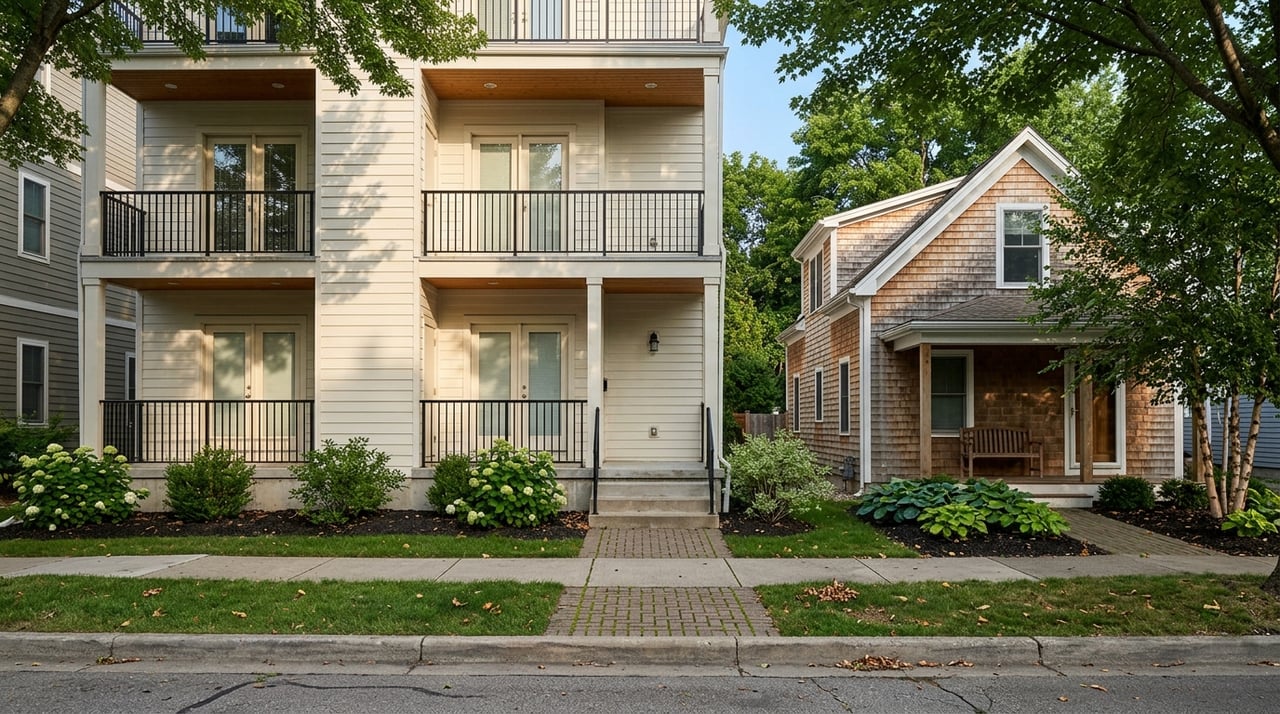
Trying to choose between a condo and a house in Traverse City? You are not alone. For many buyers here, the decision is not just about square footage or price. It is about how you want to live, how much upkeep you want to handle, and how close you want to be to downtown or the bay. This guide will walk you through the key tradeoffs so you can make a more confident decision. Let’s dive in.
Price Differences in Traverse City
In Grand Traverse County, the May 2026 housing report shows an average sale price of $423,225 for condos and $496,280 for non-waterfront homes. That gives condos a lower average price point than detached homes, at least in broad terms.
That said, the gap is not always dramatic. Current Traverse City condo inventory is also sizable, and some condo pricing falls into a similar range as many detached-home options. In other words, you may not be choosing between “cheap condo” and “expensive house.” You may be choosing between two different ownership styles at similar monthly costs.
Waterfront is where pricing really changes. The same local report shows average sale prices of $1,228,333 for waterfront homes, which suggests that access to the water often drives value more than whether a property is a condo or a house.
Monthly Costs Beyond the Mortgage
Your housing payment is usually more than principal and interest. It can also include property taxes, insurance, utilities, maintenance, repairs, and association dues.
With a house, you usually carry the full cost of exterior upkeep yourself. That can mean lawn care, snow removal, roofing, siding, and other repairs are your responsibility. A condo often shifts some of that burden into a monthly HOA fee tied to shared maintenance.
In Traverse City, sample condo listings show HOA dues in the low hundreds per month, with examples around $220, $320, $450, and $460. What those dues cover can vary a lot by building. One listing even notes that all utilities except electric are included.
That is why it helps to compare the real monthly cost, not just the sticker price. A lower-maintenance condo with dues may still feel more manageable than a house with unpredictable repair costs.
Condo Rules vs House Flexibility
A condo and a house come with different ownership structures. Under Michigan’s Condominium Act, condo co-owners must comply with the master deed, bylaws, and association rules. Condo ownership also includes shared common elements, which are the parts of the project outside the individual unit.
In practical terms, that usually means condo living comes with more structure. You may have rules around exterior changes, leasing, use of common areas, or other building-specific policies. You also need to understand that unpaid assessments can become a lien and may be foreclosed under Michigan law.
A detached house usually gives you more day-to-day control over the property. You often have more privacy, more direct control of your yard and exterior, and fewer association-based limits. For buyers who value flexibility, that can be a major advantage.
Traverse City Lifestyle Tradeoffs
In Traverse City, lifestyle can matter just as much as budget. The city sits on East and West Grand Traverse Bay, and downtown includes more than 200 locally owned businesses and more than 50 restaurants. Clinch Park Beach and other bayfront public spaces help make the core of the city especially appealing for buyers who want easy access to the water and downtown activity.
That is one reason condos can be so attractive here. A downtown or bay-adjacent condo may put you closer to restaurants, shops, public shoreline, and a lower-maintenance day-to-day routine. If you want a lock-and-leave property, a second home, or a simple base near the action, condo living can check a lot of boxes.
A house may fit better if you want more separation from neighbors, more outdoor space, or more freedom in how you use the property. If your ideal Northern Michigan lifestyle includes gardening, a larger garage, storage for outdoor gear, or a private yard, a house may be the better match.
Parking Matters More Than You Think
Parking is easy to overlook until it affects your daily routine. The City of Traverse City notes that overnight street parking is not allowed downtown, though garages and permits are available.
If you are considering a condo near downtown, ask detailed questions about assigned spaces, guest parking, garage access, and winter parking arrangements. A great location can lose some of its appeal if parking is a constant headache.
With many detached houses, parking tends to be more straightforward. Private driveways and garages often give you more flexibility, especially if you have multiple vehicles or frequent visitors.
Taxes and Principal Residence Exemption
Many buyers assume condos and houses are taxed very differently, but that is not usually the key distinction. In Michigan, the Principal Residence Exemption applies to an owner’s principal residence whether it is a condo or a house, as long as you occupy it and file the required affidavit on time.
This exemption reduces the local school operating millage by up to 18 mills. In practice, that means tax treatment often depends more on how you use the property than on whether it is attached or detached.
If you are buying a primary residence, this is an important detail to factor into your planning. If you are buying for seasonal use, your tax picture may look different.
Questions to Ask Before You Decide
No matter which direction you are leaning, a few smart questions can save you stress later. The goal is to understand not just the property, but the ownership experience.
Questions for Condo Buyers
- What exactly do the HOA dues cover?
- How much money is in reserves for future repairs?
- Are there any recent or upcoming special assessments?
- What rules apply to exterior changes, pets, guests, or leasing?
- Is the project financeable under lender requirements?
- How many parking spaces come with the unit?
Condo financing can involve more project-level review than a detached house. Lenders may need to confirm that the condominium project meets eligibility requirements, so it is wise to ask early.
Questions for House Buyers
- What will you likely spend on exterior maintenance each year?
- How old are major systems like the roof, siding, and mechanicals?
- How much yard work or snow removal will the property require?
- Does the location give you the privacy and space you want?
- Will the property still fit your needs a few years from now?
A house often gives you more freedom, but it also asks more of you in time, money, and attention. For some buyers, that tradeoff is worth it. For others, it becomes a burden.
Which Option Fits You Best?
A condo may be the better fit if you want simpler upkeep, shared maintenance, and a location closer to downtown or the bay. It can also make sense if you are looking for a seasonal property or a lower-maintenance home base in Traverse City.
A house may be the better fit if you want more privacy, more control, outdoor space, or fewer association rules. It can be a strong choice if you plan to stay long term and want room to spread out.
In Traverse City, there is no one-size-fits-all answer. The right choice depends on your budget, your lifestyle, and how you want to spend your time when you are home in Northern Michigan.
If you want help comparing condos and houses in Traverse City, Mike Annelin can help you weigh the numbers, the location, and the day-to-day lifestyle so you can choose with clarity.
FAQs
What is the average price difference between a Traverse City condo and a house?
- In Grand Traverse County’s May 2026 report, the average sale price was $423,225 for condos and $496,280 for non-waterfront homes.
Do Traverse City condos usually have HOA dues?
- Yes. Condo ownership typically includes mandatory dues, and sample local listings show monthly fees in the low hundreds, though coverage varies by building.
Are condos in Traverse City easier to maintain than houses?
- Often, yes. Condo dues commonly cover shared exterior maintenance, while house owners usually handle the full cost and coordination of upkeep themselves.
Do condos in Traverse City have more rules than houses?
- Usually, yes. Michigan condo ownership is governed by recorded documents and association rules, so buyers should review bylaws, master deed terms, and leasing policies carefully.
Is parking important when buying a downtown Traverse City condo?
- Yes. Since overnight street parking is not allowed downtown, parking access, guest parking, and assigned spaces should be part of your decision.
Do condos and houses qualify the same way for Michigan’s Principal Residence Exemption?
- Generally, yes. If the property is your principal residence and you file the required affidavit on time, the exemption can apply whether you own a condo or a house.