Buying on Lake Leelanau can feel simple at first glance: find the view you love, picture summer on the water, and write the offer. But waterfront homes often come with extra layers that are easy to miss until you are deep into due diligence. If you want to buy with more confidence, this checklist will help you focus on the details that matter most before you commit. Let’s dive in.
Why waterfront due diligence matters
A waterfront purchase in the Leelanau Peninsula is not just about the house. You also need to understand access, shoreline rules, well and septic status, flood exposure, and how the property functions when you are not there full time.
In the Lake Leelanau area, those issues often involve more than one local or state authority. The local health department handles well and septic review, EGLE regulates many shoreline and inland lake activities, and FEMA flood maps are still part of the process.
Check access before you focus on the view
One of the first things to confirm is how you legally reach the property. A parcel may be on a public road, a private road, or accessed by easement, and those differences can affect maintenance, use, and long-term costs.
Leelanau County defines a private road as one not maintained by the county road commission. That means you should not assume county plowing or public road maintenance will apply.
Ask who maintains the road
If the home is on a private road, ask who handles grading, drainage, snow removal, and repairs. In at least one Leelanau Township ordinance, private roads serving more than three residences require a maintenance plan that guarantees assessments from the affected property owners.
That makes road upkeep a real ownership issue, not a minor side note. Before your offer becomes firm, review any road agreement or maintenance documents carefully.
Request the right documents early
Before moving forward, ask for:
- The survey
- Deed restrictions
- Road association documents
- Easement language
- Any recorded maintenance agreement
These documents can clarify whether access is straightforward or whether there are shared responsibilities that may affect your decision.
Treat well and septic as core due diligence
In Lake Leelanau, well and septic review is not something to leave until the end. It is a central part of the transaction, especially for waterfront and second-home properties.
The Benzie-Leelanau District Health Department states that a Sewage & Well Evaluation is required any time an existing dwelling with a septic system and or water well changes ownership. The department also notes that the process can take about 3 to 4 weeks, so timing matters.
Understand what the health department reviews
The local health department evaluates proposed well locations and issues permits for well construction. It also requires permits for new wells, test wells, geothermal wells, and extensive modifications or repairs to existing wells.
For septic systems, permits are required for new installations, replacements, additions, and modifications. Health department approval also comes before building permits when sewage service is involved.
Ask for records, not just verbal answers
When you are evaluating a waterfront property, ask the seller for recent water-test results and septic service records. Well water sampling may include coliform bacteria, nitrate, and other parameters the department considers necessary.
Those records can give you a better picture of how the system has been maintained. They can also help you prepare the right follow-up questions during your inspection period.
Vacant land needs extra review
If you are buying vacant land or a property that is not connected to municipal wastewater, a site survey or vacant land evaluation is the first major step. That review looks at soil type, permeability, seasonal high-water table depth, slope, setbacks from wells and surface waters, easements, runoff patterns, and other site constraints.
In other words, not every beautiful waterfront parcel is automatically simple to build on. You want that answer early.
Review shoreline rules and past work
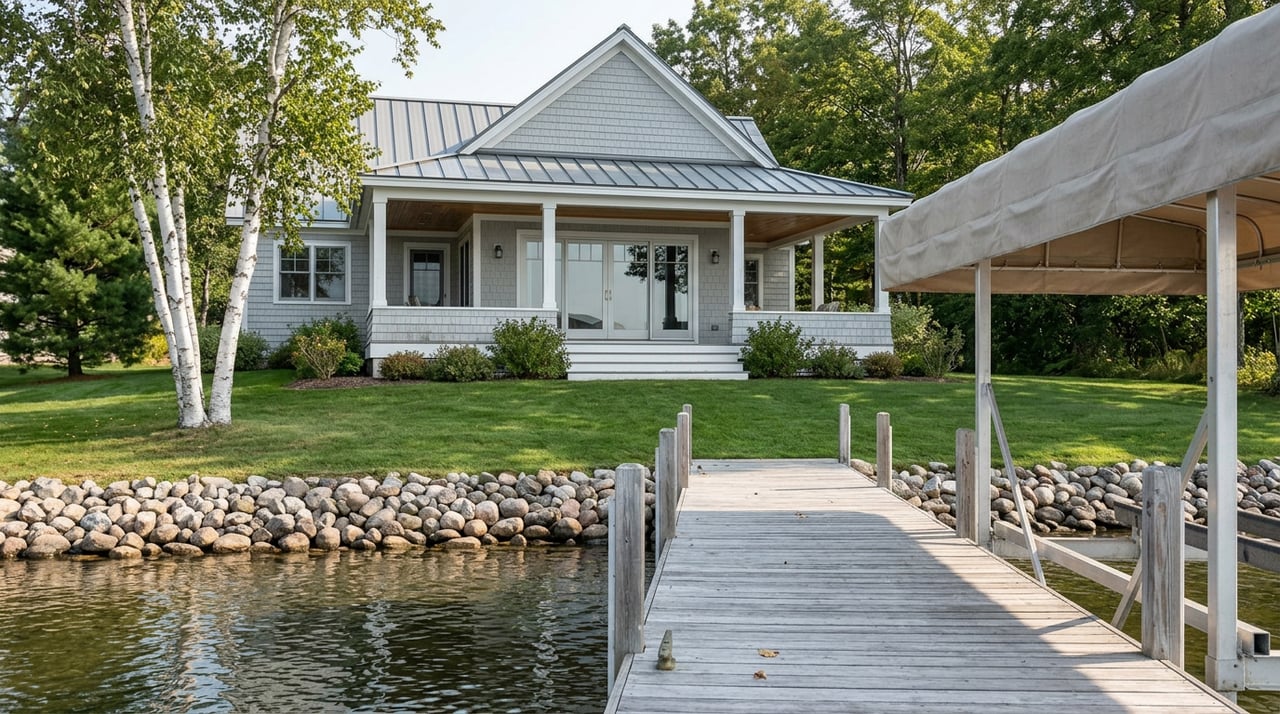
A shoreline can add value and enjoyment, but it can also bring permit questions. If you see signs of bank work, dredging, seawalls, grading, or dock changes, ask for the property’s regulatory history.
EGLE’s Inland Lakes and Streams program oversees dredging, filling, construction or placement of structures on bottomlands, marina work, and activities that interfere with natural water flow or connect a ditch or canal to an inland lake or stream. For buyers, that means visible shoreline work should trigger questions right away.
Ask what was permitted
You should ask whether any shoreline work, dock work, dredging, or grading was permitted. You should also ask whether there are restrictions on future changes.
This matters if you are imagining improvements after closing. What looks possible from the yard is not always allowed under state or township rules.
Verify township-specific rules
Local ordinances can be stricter than state rules. For example, one Leelanau Township ordinance measures inland-lake setbacks from the ordinary high-water mark and limits clearing and impervious surfaces within shoreline setback areas.
Because ordinances vary by township, verify which local rules apply to the specific parcel you are considering. That is especially important if your plans include landscaping, additions, or shoreline updates.
Pay attention to shoreline condition
MSU Extension notes that lawn-to-the-water landscaping can increase runoff, algae growth, and erosion. Natural shoreline vegetation helps protect fish, wildlife, and lake health.
Even if you do not plan to make immediate changes, the current shoreline condition can affect maintenance needs and long-term enjoyment of the property.
Include flood and water-quality checks
A waterfront home can be outside the highest-risk flood zone and still deserve a closer look. Flood mapping is still part of smart due diligence in the Lake Leelanau area.
Check the FEMA Flood Map Service Center by address to confirm whether the parcel is in a mapped flood zone. FEMA also notes that most homeowners insurance does not cover flood damage and that flood insurance is available in participating communities.
Do not assume the map tells the whole story
Waterfront risk is not only about the house footprint. EGLE notes that high water levels and flooding have affected homes, well and septic systems, farms, and roads across Michigan since 2019.
That is a good reminder to think beyond the structure itself. Access roads, utilities, shoreline stability, and septic function all matter.
Look into water-quality resources
EGLE points buyers to inland-lake water-quality resources that may include beach-monitoring data, algae-bloom reports, lake-association information, MiCorps lake reports, and How’s My Waterway data. EGLE also directs buyers to local health departments for beach advisories and public beach monitoring.
In Leelanau County, the local health department’s summer beach-monitoring program tests public beaches for E. coli each week. Advisories can be specific to a beach or boat-ramp area rather than the entire lake, so localized information matters.
Plan for second-home ownership realities
If the property will not be your full-time home, think about how it operates when you are away. That includes winter shutdown, regular maintenance, and who handles waterfront equipment.
MSU Extension notes that cottage owners commonly pull docks, store outdoor furniture, and winterize boats as part of a fall shutdown routine. For buyers, the practical question is simple: who handles all of that now, and how will you handle it after closing?
Ask how the property is closed for winter
Before you buy, ask:
- Who winterizes the home
- Who pulls or services the dock
- Who stores outdoor furniture or equipment
- Who handles boat-related shutdown tasks
- What the spring reopening process looks like
These details can affect your budget and ownership experience more than many buyers expect.
Your Lake Leelanau buyer checklist
If you want a simple way to organize your due diligence, use this checklist before writing or finalizing an offer:
- Confirm whether access is public, private, or by easement
- Ask for road maintenance agreements and related documents
- Review the survey, deed restrictions, and easement language
- Verify whether the seller has completed the required Sewage & Well Evaluation
- Request water-test results and septic pumping or service records
- If vacant land is involved, confirm whether onsite septic is feasible
- Ask for permit history on docks, grading, dredging, seawalls, or shoreline work
- Verify township-specific shoreline setbacks and clearing rules
- Check the FEMA flood map by address
- Review available local water-quality and beach-monitoring information
- Ask how the property is winterized and maintained when vacant
The bottom line for Leelanau waterfront buyers
The strongest waterfront purchases are usually the ones where you verify infrastructure, access, and regulatory history before getting swept up in the view. In Lake Leelanau, the smart path is to ask better questions early and build enough time into your due diligence window to get real answers.
If you are considering a waterfront or second-home purchase in Leelanau County, working with someone who understands the local process can make the search feel much more manageable. If you want a clear, local perspective on Lake Leelanau waterfront homes, connect with Mike Annelin.
FAQs
What should you check first when buying a Lake Leelanau waterfront home?
- Start with access, well and septic status, shoreline permit history, and flood exposure before focusing on cosmetic features.
Does a Leelanau County waterfront home need a well and septic evaluation before closing?
- Yes. The Benzie-Leelanau District Health Department states that a Sewage & Well Evaluation is required when an existing dwelling with a septic system and or water well changes ownership.
Why does private road access matter for a Lake Leelanau property?
- A private road may not be maintained by the county road commission, so you need to understand who pays for plowing, grading, drainage, and repairs.
What shoreline improvements should trigger permit questions in Leelanau County?
- Ask questions if you see docks, dredging, seawalls, bank work, grading, or major shoreline reshaping, since EGLE regulates many activities where land meets water.
How do you check flood risk for a Lake Leelanau waterfront property?
- Check the FEMA flood map by property address and discuss whether flood insurance may be worth considering, since standard homeowners insurance usually does not cover flood damage.
What water-quality questions should you ask before buying on Lake Leelanau?
- Review available beach-monitoring information, algae-related resources, and other inland-lake water-quality reports, and remember that advisories may be specific to certain public beach or boat-ramp areas.