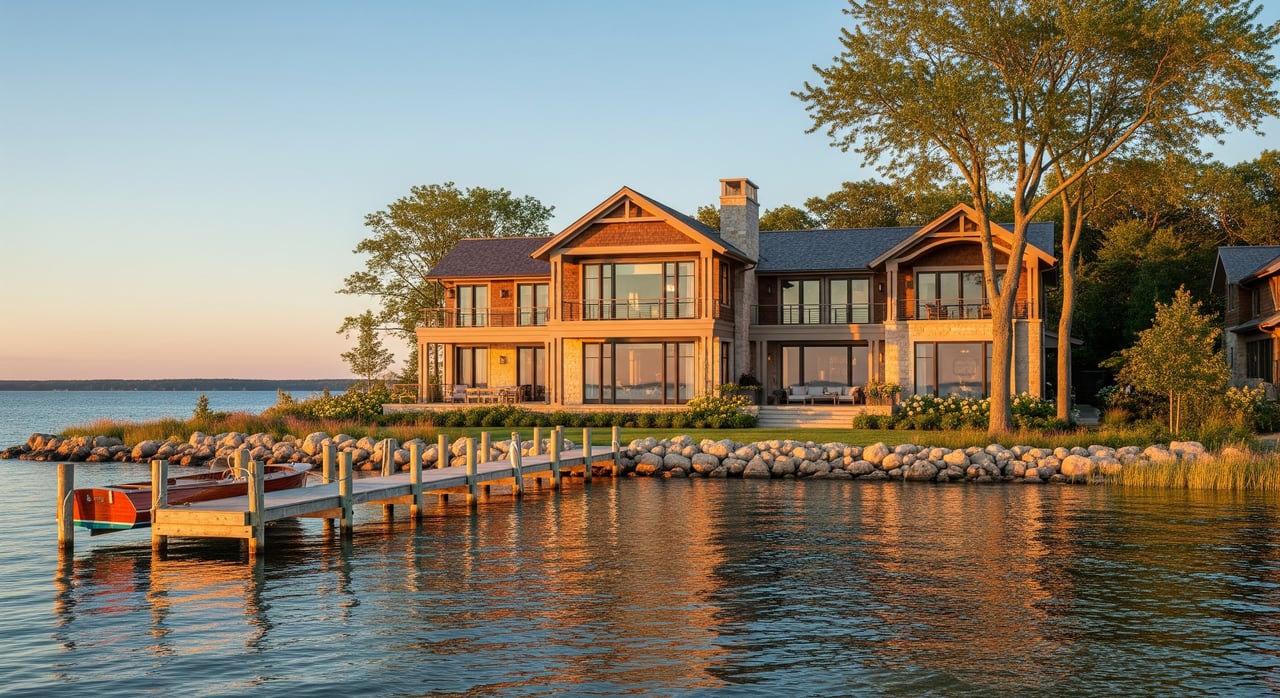
Planning a 2026 home purchase in Elk Rapids and wondering how much cash you’ll actually need at the closing table? You are not alone. Closing costs can feel opaque, especially with lake, rural, and septic or well considerations that are common in Northern Michigan. In this guide, you’ll see typical local ranges, a simple cash‑to‑close formula, a realistic example, and straightforward ways to save. Let’s dive in.
What closing costs cover
Closing costs are separate from your down payment. They include lender fees, title and settlement charges, inspection costs, prepaid items like taxes and insurance, and county recording fees. You pay them at closing in addition to your down payment unless you use credits or financing options.
Most Northern Michigan buyers can plan for roughly 2 to 5 percent of the purchase price in closing costs. Lower scenarios land closer to 1.5 to 2 percent if you avoid points and keep prepaids minimal. More complex or rural purchases with extra inspections, larger escrow reserves, or points trend toward 4 to 5 percent or higher.
Your lender must provide two important documents that itemize costs:
- Loan Estimate within 3 business days of application
- Closing Disclosure at least 3 business days before closing
Use these to verify fees and compare offers.
Elk Rapids costs: what to expect
Elk Rapids and the surrounding Antrim and Grand Traverse counties include year‑round homes, seasonal lake properties, and rural parcels. These property types can bring extra inspections, potential shoreline or erosion reviews, and different insurance needs. Proximity to Traverse City may nudge prices higher, which can raise some percentage‑based fees.
Title companies and settlement agents typically handle closings in Michigan. A buyer is not required to retain an attorney, although you may choose to do so. Fee structures vary by title company, so ask for a written quote.
Lender fees and charges
- Origination and processing: typically 0.5 to 1.0 percent of the loan amount, or a flat fee of about 500 to 2,000 dollars
- Underwriting: about 300 to 800 dollars
- Discount points (optional): 1 point equals 1 percent of the loan amount, used to lower the rate
- Appraisal: about 450 to 800 dollars, higher for complex or lakefront properties
- Credit report: about 25 to 50 dollars
- Flood determination: about 15 to 30 dollars
- Application or commitment fee: sometimes 200 to 1,000 dollars
- Mortgage insurance: varies by loan type. Private mortgage insurance or upfront premiums may apply if you put less than 20 percent down
Title and settlement fees
- Title search and exam: about 200 to 500 dollars
- Lender’s title policy: cost varies with loan amount, often low hundreds to low thousands of dollars
- Owner’s title policy (optional but recommended): often 500 to 2,000 dollars or more, based on purchase price
- Closing or settlement fee, doc prep: about 300 to 800 dollars
- Recording fees: about 25 to 150 dollars per document
- Wire or courier fees: about 25 to 75 dollars
Prepaids and escrow reserves
- Homeowner’s insurance: often the first year paid at closing, about 600 to 2,000 dollars or more depending on coverage
- Prepaid interest: interest from closing date to first payment, often a few hundred to a few thousand dollars depending on rate and day of month
- Escrow reserves for taxes and insurance: lenders commonly collect 2 to 3 months, plus a cushion depending on policy
Inspections and specialized reports
These are especially relevant for rural, older, or waterfront properties and are often paid at time of service.
- General home inspection: about 350 to 600 dollars, higher for larger or older homes
- Radon test: about 150 to 300 dollars
- Septic evaluation and dye test or pump‑out: about 300 to 600 dollars, more for a full evaluation
- Well inspection and water test: about 150 to 400 dollars, lab fees may be additional
- Wood‑destroying insect inspection: about 50 to 200 dollars
- Shoreline or site evaluations: variable, often 300 to 1,000 dollars or more
Surveys, HOA, and permits
- ALTA or plot survey: about 400 to 1,200 dollars or more, based on lot size and complexity
- HOA or condo transfer and docs: about 100 to 400 dollars, if applicable
- Septic or well permit record fees: small county charges may apply
Taxes and transfer fees
- Transfer tax: in Michigan, payment responsibility often follows local custom and is frequently the seller, but confirm with the title company and purchase contract
- Recording fees: see the recording fee ranges above
How to estimate your cash to close
Cash to close usually includes your down payment plus closing costs plus prepaids and escrow reserves, minus any credits and your earnest money deposit. Use this 6‑step approach:
- Define purchase price and down payment to calculate your loan amount.
- Add lender fees, appraisal, credit report, and any application fee.
- Add title and settlement fees, including lender and optional owner title policies.
- Add prepaids and escrow reserves, such as the first year of insurance, prepaid interest, and 2 to 3 months of taxes and insurance.
- Add inspections and surveys you plan to order.
- Subtract seller credits, lender credits, and your earnest money deposit.
Elk Rapids example for 2026 (illustrative)
Assume a mid‑range Elk Rapids area home.
- Purchase price: 450,000 dollars
- Down payment: 10 percent equals 45,000 dollars
- Loan amount: 405,000 dollars
Estimated costs:
Lender fees and appraisal: about 2,500 dollars
Credit report and flood cert: about 75 dollars
Title search, closing fee, and recording: about 1,200 dollars
Lender’s title policy: about 1,200 dollars
Owner’s title policy (optional): about 1,500 dollars
Home inspection plus septic or well tests: about 900 dollars
Prepaid homeowner’s insurance: about 1,200 dollars
Prepaid interest, 10 to 20 days: about 800 dollars
Escrow reserves for taxes and insurance, 2 months: about 1,400 dollars
Miscellaneous, such as wire and a basic survey if needed: about 700 dollars
Total closing costs and prepaids without owner’s policy: about 11,475 dollars
Total closing costs and prepaids with owner’s policy: about 12,975 dollars
Total cash to close, down payment plus costs: about 56,475 to 57,975 dollars
Actual costs can be higher for lakefront or large‑acreage properties. Always verify with your lender and chosen title company.
Smart ways to reduce cash to close
You have levers you can pull to bring your upfront number down without hurting your long‑term goals.
- Shop at least 2 to 3 lenders. Compare origination fees, rates, and appraisal charges side by side. Small changes can save thousands.
- Negotiate seller concessions. In many cases, sellers can credit part of your closing costs, subject to lender limits.
- Consider lender credits. You accept a slightly higher interest rate in exchange for the lender paying some costs. Run the monthly versus upfront tradeoff.
- Time the closing date. Closing near month‑end can reduce prepaid interest.
- Evaluate optional items. Skipping the owner’s title policy saves a one‑time premium, but understand the risk before deciding.
- Explore assistance programs. Some state or local programs can help with down payment or closing costs if you qualify.
- Be selective with inspections. Do not cut essential inspections for rural properties, such as septic and well. Focus on what is necessary for the property type and your risk tolerance.
Local steps to nail down the numbers
- Request a Loan Estimate from 2 to 3 lenders who regularly close loans in Antrim and Grand Traverse counties.
- Ask 1 to 2 local title companies for a fee quote that includes lender and optional owner policy premiums, settlement fees, and recording.
- Contact the county treasurer or assessor to understand millage rates and likely tax prorations. This helps you estimate escrow reserves.
- Get quotes for inspections you expect to order, such as home, radon, septic, and well.
- Ask your agent to share anonymized Closing Disclosures from similar recent sales to sanity‑check your estimates.
Bottom line for Elk Rapids buyers
If you plan to buy in 2026, budget 2 to 5 percent of the purchase price for closing costs in addition to your down payment, with rural or lakefront properties trending higher. Build your estimate using the step‑by‑step list above, verify with real quotes, and use credits and timing to reduce your cash to close. The right plan turns surprises into confidence.
Want a local, high‑touch guide who understands Elk Rapids, waterfront nuances, and how to structure offers that win while protecting your budget? Let’s connect with Mike Annelin to map your path from research to keys in hand.
FAQs
What are closing costs for an Elk Rapids home purchase?
- Closing costs are lender, title, inspection, and prepaid charges you pay at closing, typically 2 to 5 percent of the purchase price in addition to your down payment.
How is cash to close different from the down payment?
- Cash to close usually includes your down payment, all closing costs, prepaids and escrow reserves, minus any credits and your earnest money deposit.
Do Michigan buyers pay transfer tax in Antrim or Grand Traverse counties?
- Local practice often assigns transfer tax to the seller, but you should confirm responsibilities in your purchase contract and with your title company.
Are septic and well inspections required for Northern Michigan homes?
- Lenders do not always require them, but they are strongly recommended for rural properties and may be required for certain loan programs or underwriting.
How many months of taxes and insurance will the lender collect?
- Many lenders collect 2 to 3 months for escrow reserves and may include a cushion based on their policy. Ask your lender for the exact amount.
Can I roll closing costs into my mortgage for an Elk Rapids purchase?
- Some costs can be financed or covered by lender credits or seller concessions, but you cannot finance your down payment into the mortgage.